Why Organic Bedding Is the Smartest Bedroom Upgrade You'll Make This Year
You spend roughly a third of your life in bed. And yet, most people put more thought into the thread count of their sheets than into what those sheets are actually made of — or what went into making them.
The global organic bedding market just crossed $1.1 billion. It's growing at nearly 7% a year. That's not a niche trend. That's a shift. And if you've been thinking about making the switch, here's everything you need to know — and why now is the right time.
What Does "Organic Cotton" Actually Mean?
Organic cotton is grown without synthetic pesticides, fertilisers, or genetically modified seeds. It's processed without bleaches, formaldehyde, or chemical softeners — the kinds of chemicals that conventional cotton picks up along the way from farm to factory to your bedroom.
According to the Global Organic Textile Standard (GOTS), organic certified textiles must meet strict criteria at every stage of production: from the soil the cotton grows in, to the dyes used, to the wages paid to the workers who make it.
That matters for three reasons:
For your skin. Conventional cotton bedding can carry residual pesticides and chemical finishes. For people with sensitive skin, eczema, or allergies, this is a real issue. Organic cotton — especially muslin and percale weaves — is softer, breathes better, and doesn't irritate.
For the planet. Conventional cotton farming uses roughly 16% of the world's insecticides despite covering just 2.5% of agricultural land. Organic farming uses no synthetic inputs, consumes significantly less water, and rebuilds rather than depletes the soil.
For the people making it. Organic certifications include labour standards. When you buy certified organic textiles, you're also buying into safer working conditions for the farmers and weavers behind the product.
The Case for Muslin and Percale Specifically

Not all organic cotton is created equal. The weave matters enormously for how a fabric feels and performs.
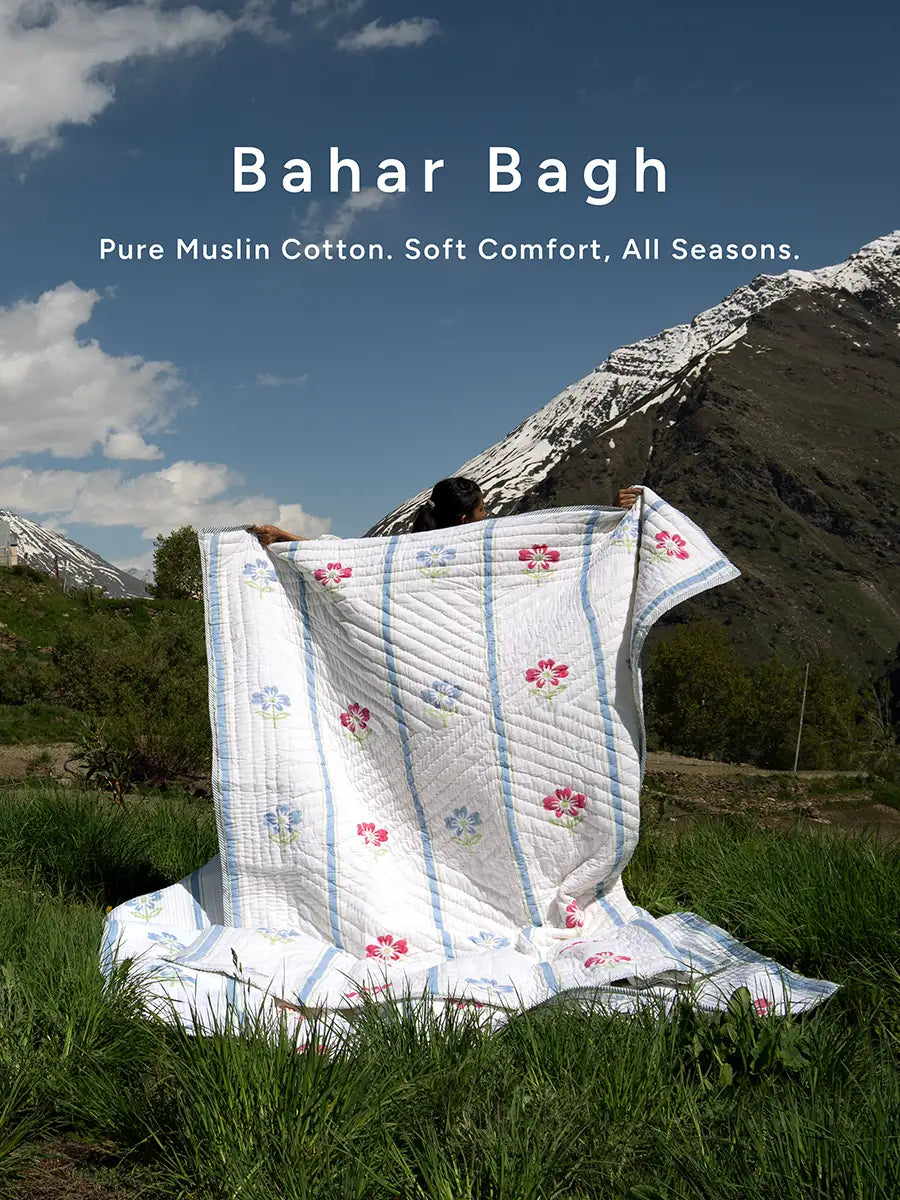
Muslin is a loose, open weave — feather-light and breathable. It's what you want when the weather is warm, or when you sleep hot, or when you just want something that feels like nothing at all against your skin. Our muslin blankets, dohars, and comforters use two to three layers of organic muslin — the kind of gentle weight that feels like being wrapped in a breeze.
Percale is a tighter, one-over-one-under weave that produces a crisp, cool, hotel-quality feel. Our 350 TC organic percale sheet sets start soft and only get better with washing. Unlike sateen, percale doesn't trap heat — making it the choice of anyone who wants cool, clean sleep.
Natural Dyes: The Detail Most Brands Don't Talk About

Here's something that rarely comes up in bedding conversations: even if the cotton is organic, the dyes used to colour it often aren't.
Synthetic azo dyes — the kind used in most mass-market textiles — contain compounds that can cause skin irritation and have been linked to environmental contamination in waterways near textile factories.
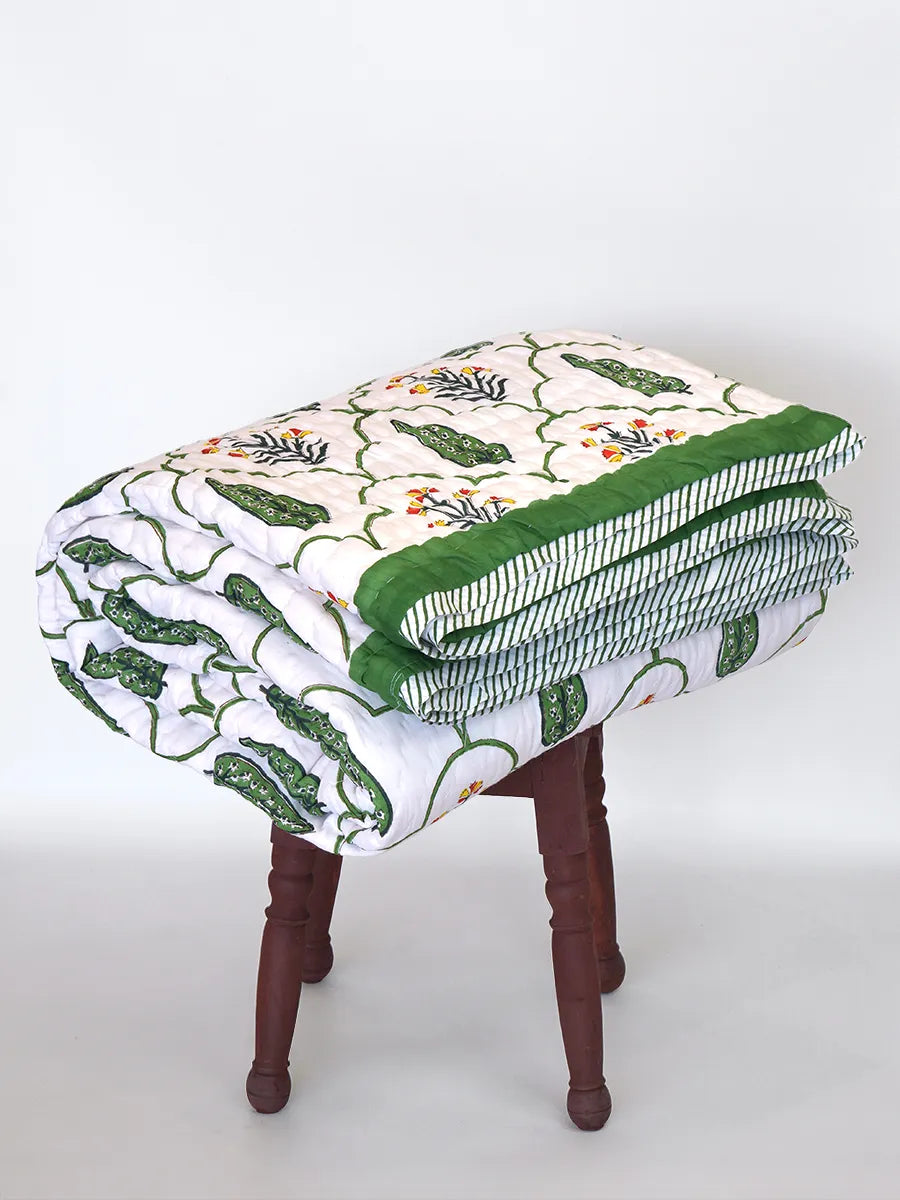
At The Jaipur Wala, every print is made using natural dyes derived from plants, minerals, and earth pigments — the same materials Jaipur's artisans have been using for centuries. Indigo for blues. Turmeric and pomegranate rind for yellows. Iron and tannin for deep blacks and greys. They produce colours that are rich but not harsh, and that age gracefully — mellowing into something even more beautiful over time.
What the Market Is Telling Us
Over 64% of global consumers now prefer eco-friendly bedding materials, with 58% specifically opting for certified organic cotton products. That's not a fringe preference anymore — that's the majority.
Today's consumers — particularly millennials and Gen Z — prioritise transparency and sustainability, and are willing to pay a premium for it. Families choose organic for hypoallergenic properties and child safety. Luxury buyers seek natural fibres with eco-conscious credentials.
Made in Jaipur. Not a Factory.

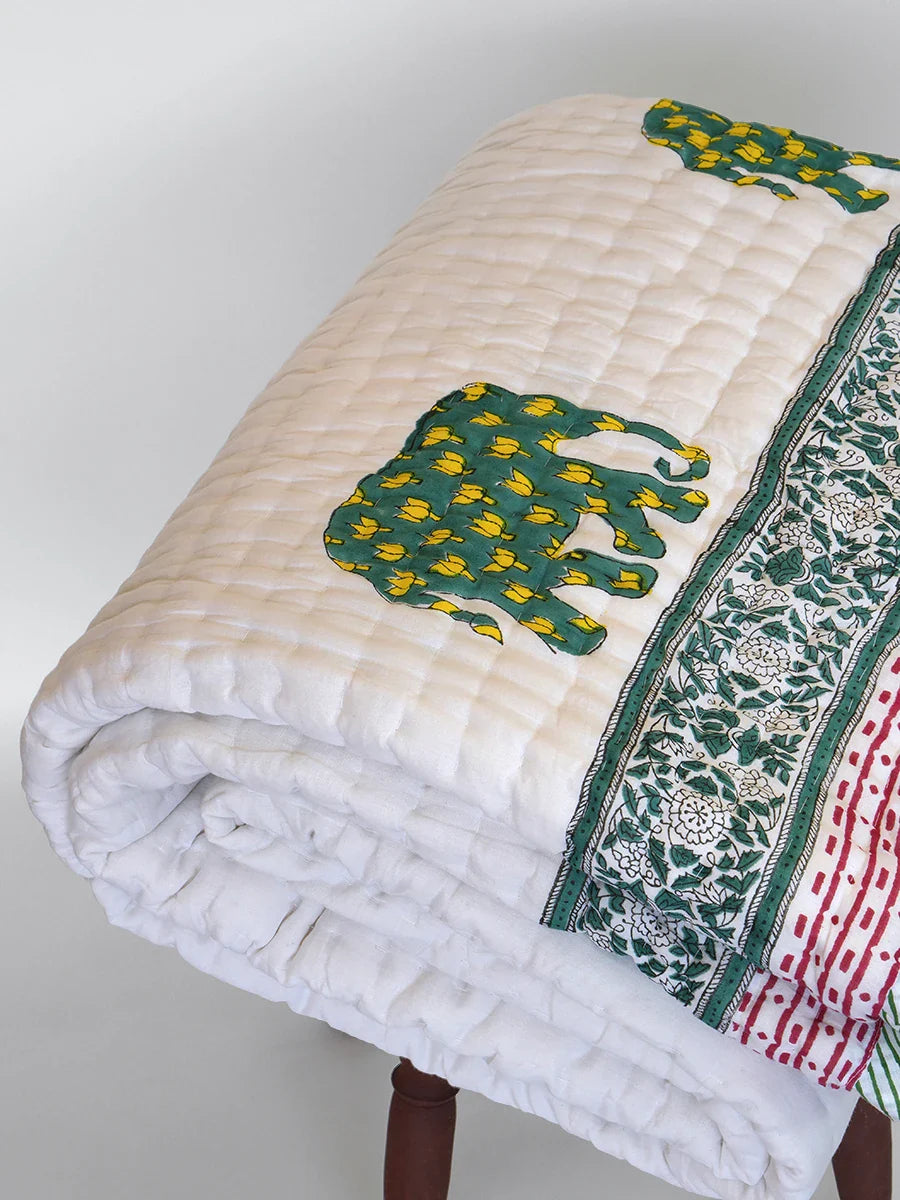
Every quilt, sheet set, blanket, and comforter we make begins in a home in Jaipur — not a factory floor. The block printing is done by hand, using carved teak wood blocks that artisans have often inherited from their parents. The quilting is done by women artisans who stitch entirely by hand. The cotton filling is hand-fluffed and carded the traditional way.
There is no conveyor belt. There is no industrial dye bath. There is no shortcut. This is what slow textiles looks like. And this is exactly what the world is moving back toward.
Where to Start
If you're new to organic bedding, here's a simple guide:
- Hot sleepers / warm climates — Start with a muslin dohar or our Organic Muslin Comforter. Breathable, layered, and light enough to use year-round.
- Fresh, hotel-style feel — Our 350 TC organic percale sheet sets are the place to start. Crisp, cool, and long-lasting.
- A bedroom refresh on a smaller scale — Our 400 TC percale cushion covers are a low-commitment first step that make a disproportionate visual difference.
- A gift — Any of our handstitched quilts. Nothing says this was made with intention quite like something literally stitched by hand.
The bedroom is where you recover. Where you rest. Where your body and mind recharge for everything that comes next. It's worth getting right.