The Art of Hand Block Printing: How a 400-Year-Old Craft Ends Up on Your Bed
Before a single quilt leaves our hands, it goes through a process that hasn't fundamentally changed in four centuries.
Not because we haven't tried to improve it. But because there isn't a better way.
This is how hand block printing works — and why it produces something that no machine can replicate.
Jaipur: Where the Craft Lives

Jaipur's hand block printing tradition stretches back over 400 years, shaped by Persian influences, Mughal patronage, and the ingenuity of Rajasthan's artisan communities. The craft evolved across two distinct villages — Sanganer and Bagru — each developing its own visual identity.
Sanganer prints are known for their delicacy: fine lines, intricate floral motifs, pastel tones on white fabric. Bagru prints are bolder — earthy, rust-red, with mud-resist (dabu) techniques that create dramatic depth.
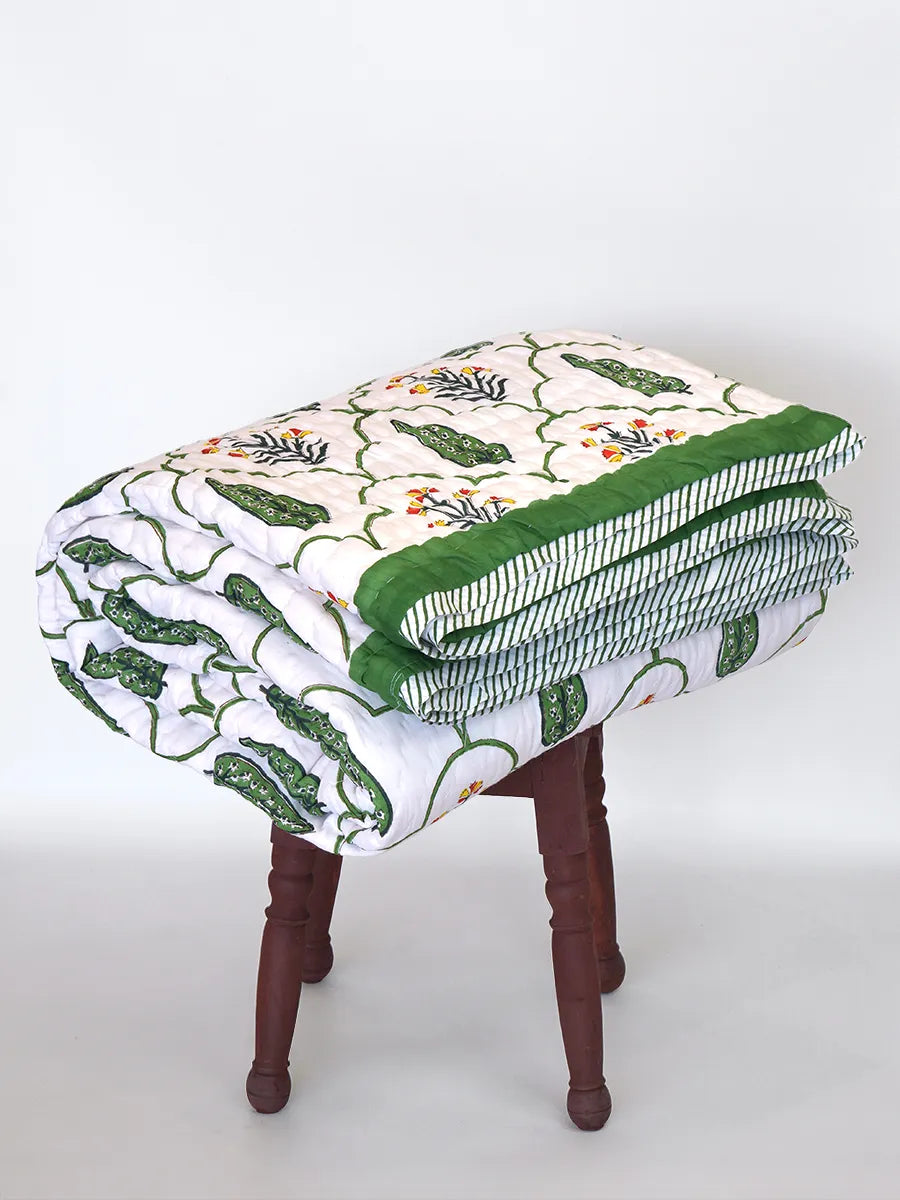
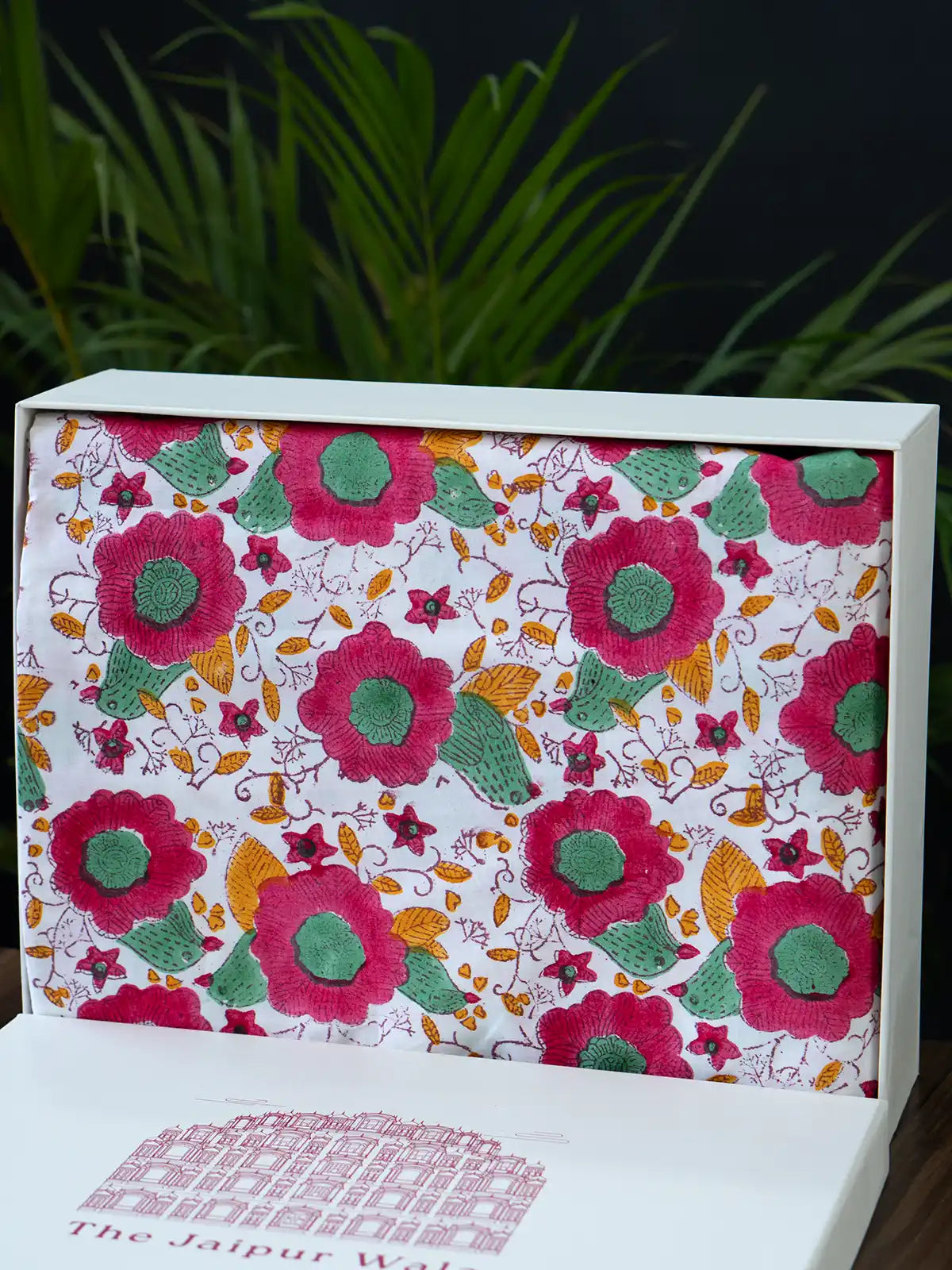
At The Jaipur Wala, we work with artisans rooted in the Sanganer tradition. The prints you see on our quilts, blankets, and sheet sets carry that legacy — elegant, repeating, quietly beautiful.
Step 1: The Block
Everything begins with the carved wooden block. Blocks are typically made from teak — a hardwood dense enough to hold precise detail and durable enough to last decades of daily use. A skilled block carver starts with a hand-drawn design, transfers it to the wood surface, and then carves it using a combination of chisels and hand tools. A single block can take anywhere from a few hours to several days to complete, depending on the complexity of the motif.
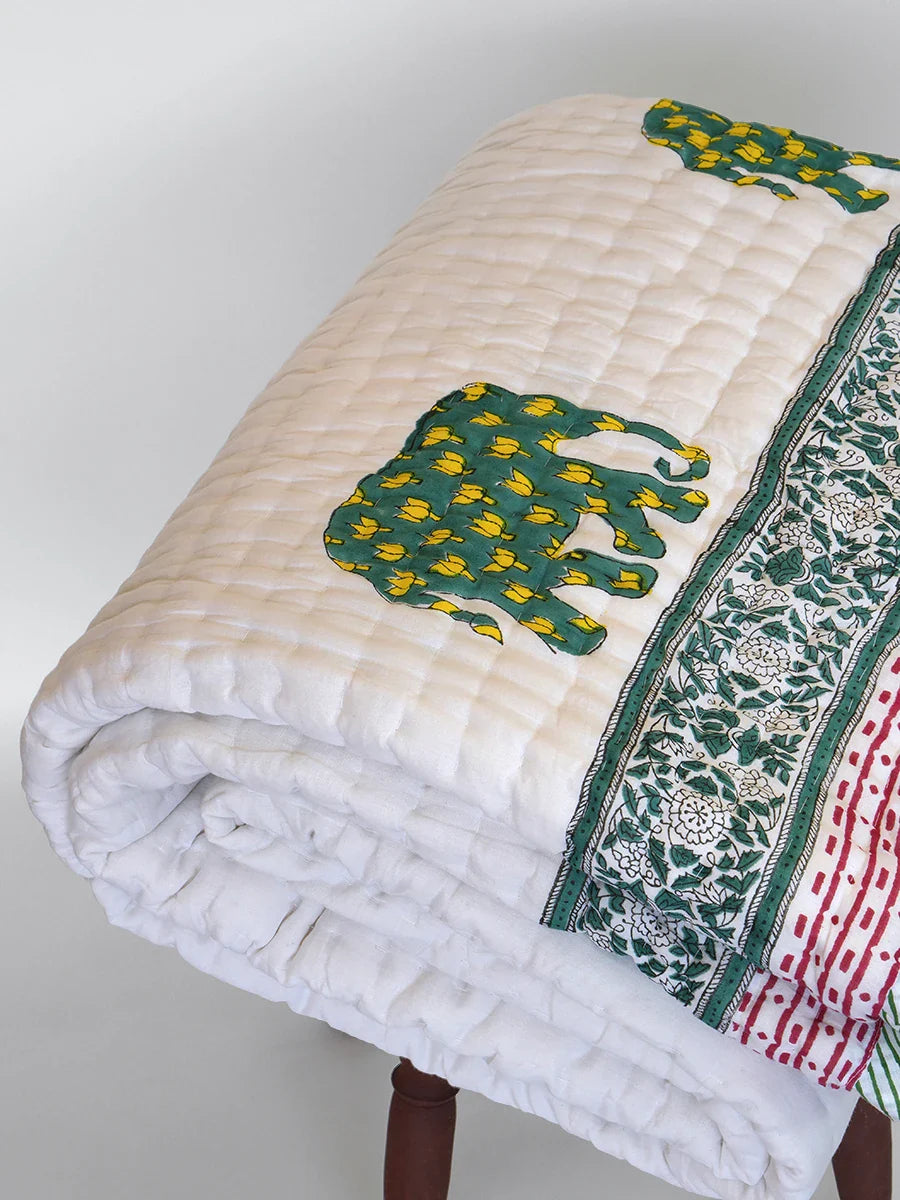
Many of the blocks in use at our partner workshops have been passed down through families — some are generations old. When you buy a Jaipur Wala quilt with an elephant motif or a floral pattern, that design may have been stamped using a block that an artisan's grandfather carved.
Step 2: The Natural Dye

Before the printing begins, the dye must be prepared. Natural dyes come from plants, minerals, and earth. Indigo produces the deep blues you see in many of our pieces. Pomegranate rind and turmeric yield warm yellows. Iron-based dyes produce blacks and deep greys. Henna, marigold, and various roots round out the palette.
Each dye behaves differently depending on the mordant used and the water mineral content. Natural dye work requires real knowledge — the ability to read a batch, adjust, and compensate for variability that synthetic dyes simply don't have. The result is colour that is organic in the truest sense: warm, varied, alive. It ages — fading gently into tones that are, in many cases, even more beautiful than the original.
Step 3: The Printing
With the fabric laid flat on a padded printing table and the dye-soaked block in hand, the artisan begins to print. They press the block firmly and evenly onto the fabric — weight distributed through the palm, applied with a decisive thump — then lift it cleanly before moving to the next position. The block must align precisely with its previous impression to maintain the repeat pattern. Getting this right takes years of practice. Senior artisans develop an almost unconscious sense of the correct spacing — hands and eyes working together faster than conscious thought can manage.
For multi-colour prints, each colour requires a separate block and a separate pass, with the fabric allowed to dry between applications.
Step 4: The Imperfection

Here is the thing about hand block printing that many people misunderstand when they first encounter it: it is not perfectly uniform. A tiny ink bleed at the edge of a petal. A ghost impression where the block lifted at a slight angle. A fractional variance in spacing between two repeats. These are not quality control failures. They are the inherent signature of a human hand doing human work.
In a world where digital printing produces pixel-perfect uniformity, hand block print carries a visible irregularity that is its most powerful aesthetic quality. It is the textile equivalent of a handwritten letter versus a typed one — technically "imperfect," but unmistakably personal.
From Block to Bed: The Quilting
For our quilts and comforters, the printed fabric becomes the outer layer of a more complex construction. Our quilts are filled with surgical-grade cotton — hand-fluffed and carded by artisans to ensure even distribution, then layered between two panels of organic cotton. The quilting itself is done entirely by hand, with women artisans stitching patterns across the surface that both hold the fill in place and add a dimensional texture visible on the finished product.
A single quilt takes multiple days to complete. It passes through at least a dozen pairs of hands before it reaches you.
Why It Matters Now
Today, Jaipur's hand block prints have transcended regional boundaries, appreciated internationally by fashion designers, global markets, and eco-conscious consumers. The movement toward slow fashion and handmade products has given Jaipur block printing a renewed relevance. Buying a hand block printed textile isn't just an aesthetic choice — it's a vote for a supply chain that keeps these skills alive and keeps artisan families economically secure.
What to Look For
When buying hand block printed textiles, here's how to tell if you're getting the real thing:
- Small irregularities are a good sign. Perfectly uniform repeats indicate machine printing. Slight variations in spacing, ink density, and alignment are the fingerprints of hand work.
- The dye should look rich but organic. Natural dyes have warmth and depth. Synthetic dyes are flat and bright.
- Ask about the process. Any brand doing real hand block work will be able to tell you where, how, and by whom.
At The Jaipur Wala, every piece we make is printed by hand in Jaipur. We can tell you which workshop it came from. We can describe the process because we've seen it ourselves.