Muslin vs Percale vs Mulmul: Which Fabric Is Right for You?
When you're buying bedding, the fabric matters more than almost anything else — more than the pattern, more than the brand, arguably more than the price.
But the language around bedding fabrics is genuinely confusing. Thread count, weave types, material names — it's a lot to parse. Here's a plain-language guide to the three fabrics we work with most at The Jaipur Wala — muslin, percale, and mulmul — what makes each one different, and which is right for your sleeping style.
First: What They All Have in Common
All three fabrics used at The Jaipur Wala are woven from organic cotton. No blends with polyester or rayon. No synthetic finishes or wrinkle-resistance treatments. Just cotton, grown and processed the way cotton should be.
Organic cotton behaves differently from conventional cotton. It's softer. It breathes better. It gets better with age — softer, more broken-in, more comfortable — rather than pilling, dulling, or degrading. What separates muslin, percale, and mulmul is how the cotton is woven, and that weave structure determines almost everything about how the fabric feels, performs, and wears.
Muslin: The Breathable Workhorse

What it is: Muslin is a plain-weave cotton fabric with a relatively loose, open construction — woven simply, over and under in alternating rows.
How it feels: Light. Airy. Almost weightless. Slightly textured, naturally soft, with a gentle drape that feels relaxed rather than crisp.
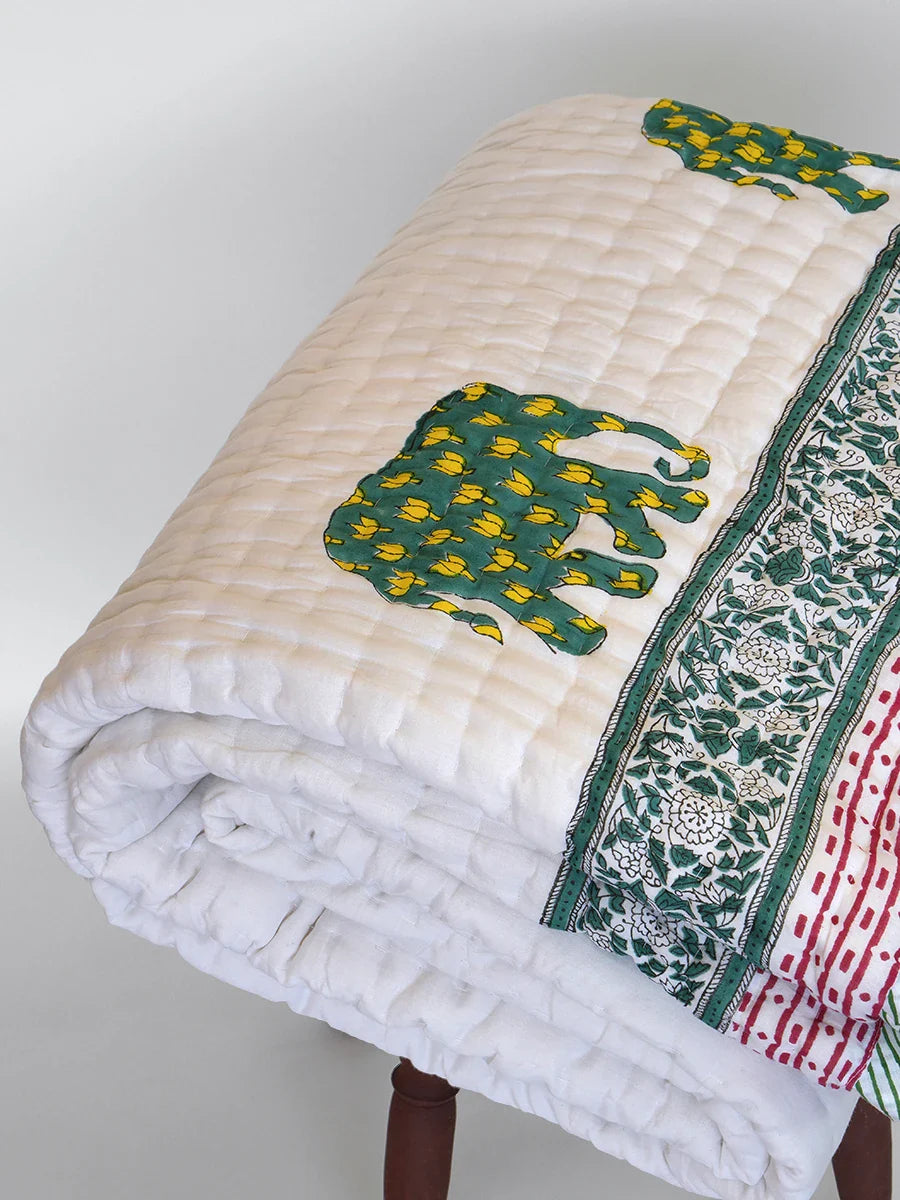
How it performs: Muslin excels in warm weather and for people who sleep hot. The open weave allows airflow, wicks moisture efficiently, and doesn't trap body heat. Our muslin dohars and blankets are made from two or three layers stitched together — this gives them gentle warmth without any heaviness. Our muslin comforters use the same organic muslin as the outer shell, filled with surgical-grade cotton inside.
Best for: Warm or humid climates, hot sleepers, air-conditioned rooms, year-round use as a lighter cover.
Products: Wavey, Haathi, Gulmarg, Munnar, Palm, Azalea, Lily, Paradise dohars — and our Organic Muslin Comforter range
Percale: The Crisp, Cool Classic

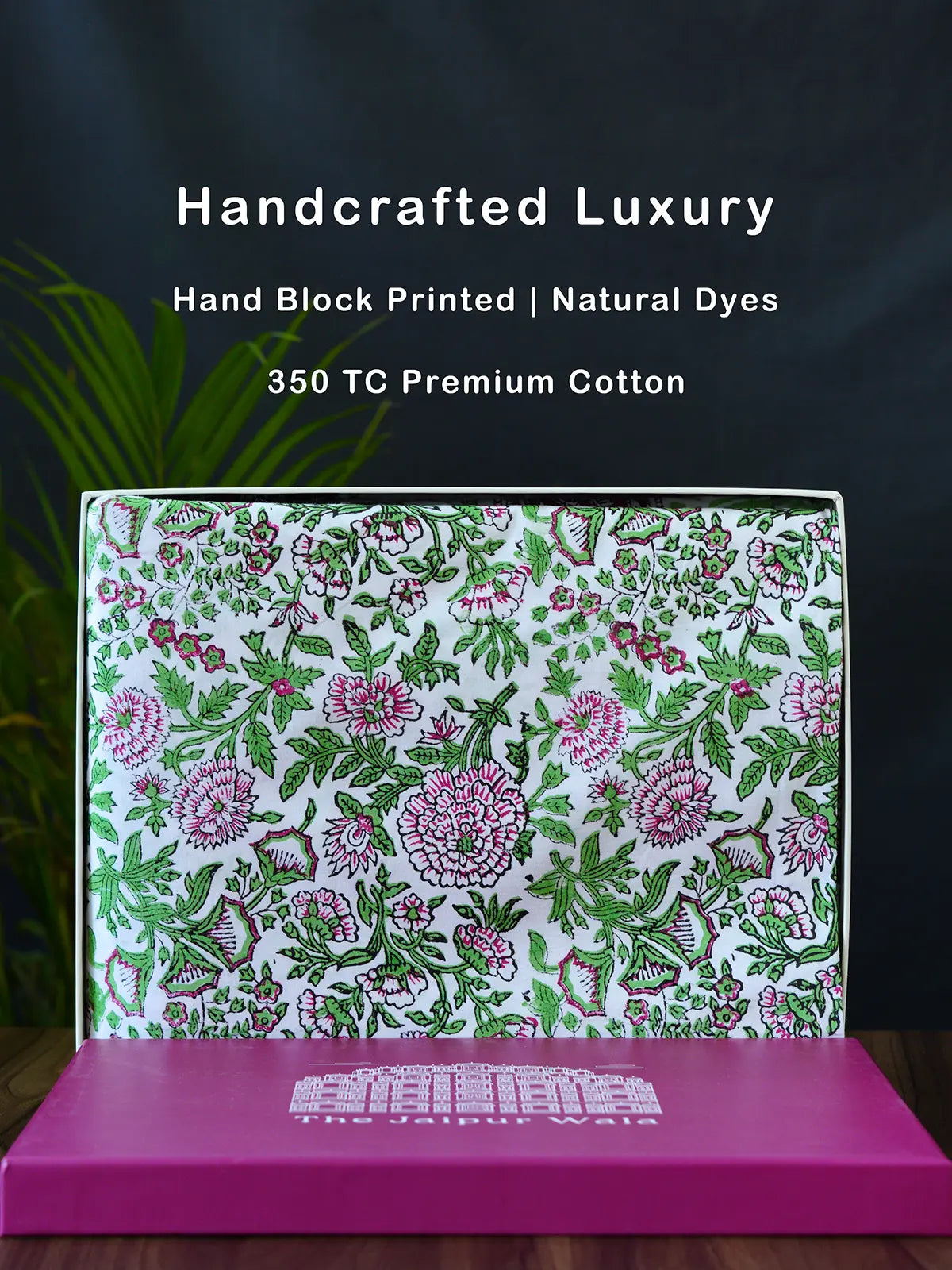
What it is: Percale is also a plain-weave fabric, but woven with a higher thread count and a tighter structure than muslin. Our sheet sets are woven at 350 TC — 350 threads per square inch.
How it feels: Cool and crisp, in the way a freshly ironed shirt feels. There's a slight resistance when you slide your hand across it — a pleasant density that feels substantial without being heavy. Often described as "hotel-quality" because of its clean, smooth, put-together feel.
How it performs: Exceptionally durable. The tight weave resists pilling and holds its structure through hundreds of washes. It breathes well, and unlike sateen, doesn't feel silky or slippery — it feels grounded.
What to expect when new: Percale from organic cotton will feel crisper than you might expect on first use. This is normal — the natural cotton finish means the fabric will soften naturally over several washes into something even better.
Best for: People who prefer a crisp structured feel, cool sleepers who want breathability with substance, those who prioritise longevity.
Products: Parra, Pink City, Honey, Misty, Orin, Riva, Desert, Baghiya, Amalya, Kora sheet sets
Mulmul: The Featherweight Luxury

What it is: Mulmul (also spelled malmal) is a finer, softer version of muslin — woven from lighter-weight yarn to produce an even more delicate, gossamer-like fabric. Historically reserved for royalty because of how difficult it was to produce.
How it feels: If muslin feels like a summer shirt, mulmul feels like a whisper. The lightest fabric we work with — almost tissue-thin at a single layer, yet surprisingly warm and enveloping when layered. The softness is immediate and extraordinary.
How it performs: Mulmul is made for warmth without weight. Our mulmul blankets are reversible — two layers of mulmul with a cotton sheet in between — creating something that breathes like a scarf but insulates like a blanket.
A note on care: Mulmul rewards gentle treatment. Cold wash, gentle cycle, air dry. It will last for years with a little consideration.
Best for: Mild or transitional weather, people who want warmth but find quilts too heavy, babies and children, anyone who wants the most luxurious hand feel we offer.
Products: Harp, Plum, Peony, Or-Pi, Harpi, Hibiscus, Palm mulmul blankets
How to Choose
- I want sheets that feel like a luxury hotel. → Percale sheet sets. The crispness is the whole point.
- I sleep hot and want something for all year. → Muslin dohar. Light enough for summer, layered enough for air-conditioned winter nights.
- I want the softest, lightest blanket possible. → Mulmul blanket. Nothing we make is lighter or softer.
- I want a filled quilt or comforter. → Our handstitched organic cotton quilts and muslin comforters. The quilts are filled with natural cotton and stitched entirely by hand; the comforters use an organic muslin shell with surgical cotton fill inside.
- I'm buying for a baby or young child. → Mulmul, without question. Or a lightweight muslin dohar. Soft, breathable, and gentle on new skin.
- I want something that will last a decade. → Percale sheet sets or a handstitched quilt. Both are built to age gracefully.
The best fabric is the one that matches how you actually sleep. If you're still not sure, write to us. We know these products well and we're happy to help you find the right one.