How to Care for Your Organic Cotton Bedding (So It Lasts for Years)
Organic cotton bedding is an investment — not just financially, but in the way you've chosen to sleep. The good news: it's not precious or fussy. It just requires a few habits that most people haven't been told about.
The First Wash: The Most Important One
Before you use any new organic cotton bedding for the first time, wash it. New textiles accumulate natural starch from the weaving process, dust from storage, and handling residue from transit. A first wash removes all of that and begins the softening process that organic cotton is known for.
For percale sheet sets: Machine wash warm (not hot), gentle cycle, with a mild detergent. No fabric softener. Tumble dry low or line dry. The fabric will feel noticeably softer after this first wash.
For muslin and mulmul blankets/dohars: Cold wash, gentle cycle. These are lighter fabrics and don't need heat to clean. Line dry is preferred.
For handstitched quilts: Cold wash, gentle cycle. Lay flat or hang to dry rather than using a dryer.
The Fabric Softener Problem

Fabric softeners work by coating fibres with a thin film of silicone or quaternary ammonium compounds. This film reduces friction — hence the softness — but also reduces breathability and, over time, reduces the fabric's ability to absorb moisture.
For organic cotton — which is already naturally soft and grows softer with washing — fabric softener is counterproductive. The same goes for dryer sheets. Skip them both.
If you want extra softness, add half a cup of white vinegar to your rinse cycle instead. It breaks down mineral deposits from hard water, removes detergent residue, and leaves the fabric naturally soft without any coating.
Temperature: Cooler Than You Think
For organic cotton, warm water (40°C / 104°F) is sufficient to clean effectively and far kinder to the fabric than hot. For mulmul blankets, go cooler — 30°C (86°F) max. Hot water weakens cotton fibres, fades natural dyes faster, and causes shrinkage.
Drying: The Sun Is Your Best Friend

Line drying in sunlight is the best thing you can do for organic cotton bedding. The sun naturally brightens whites and light colours, kills any residual bacteria, and is infinitely gentler than a dryer's heat and tumbling.
If you're using a dryer, use the low heat setting and remove items while still slightly damp. Over-drying is one of the main causes of cotton fabric degradation.
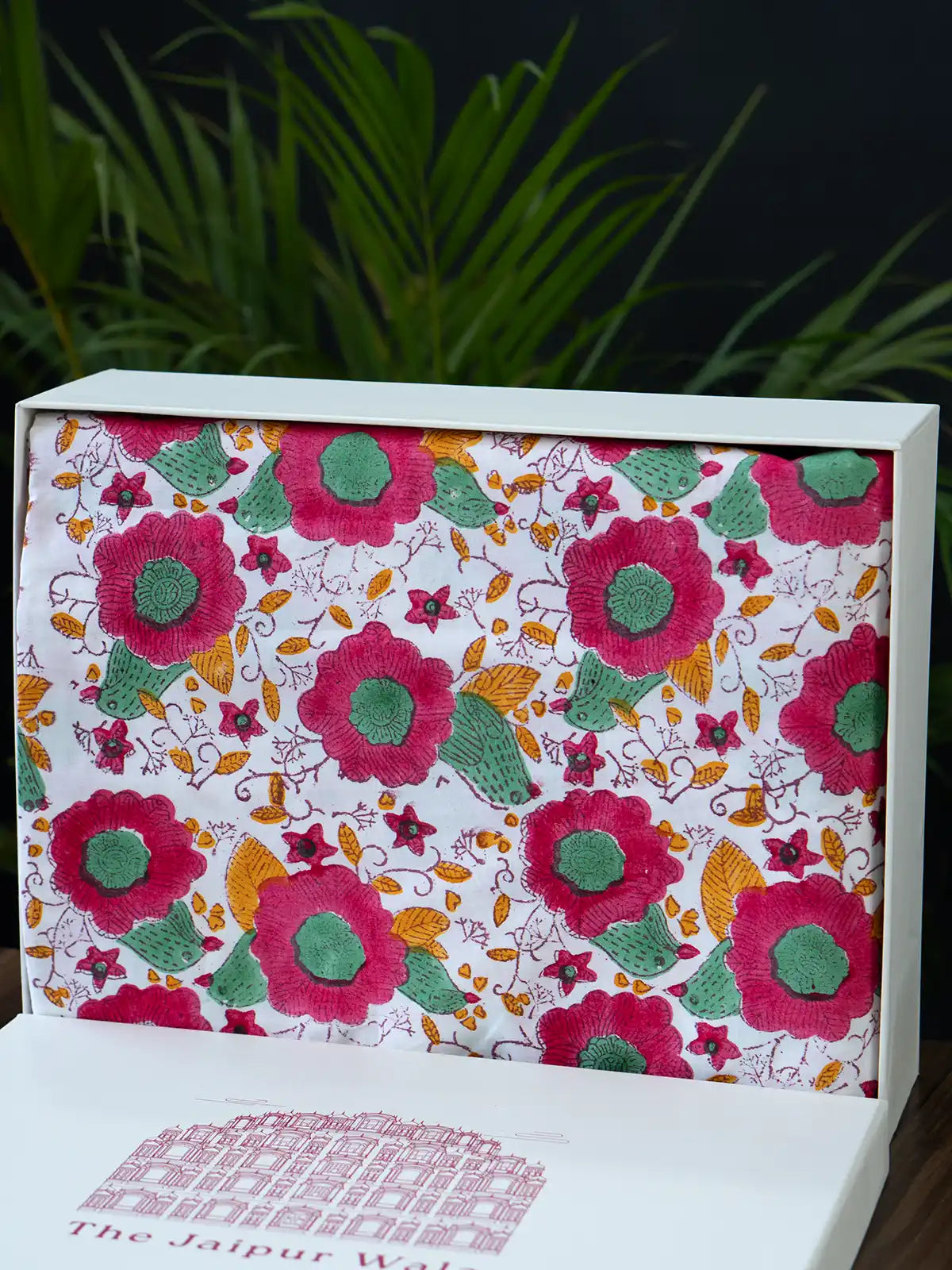
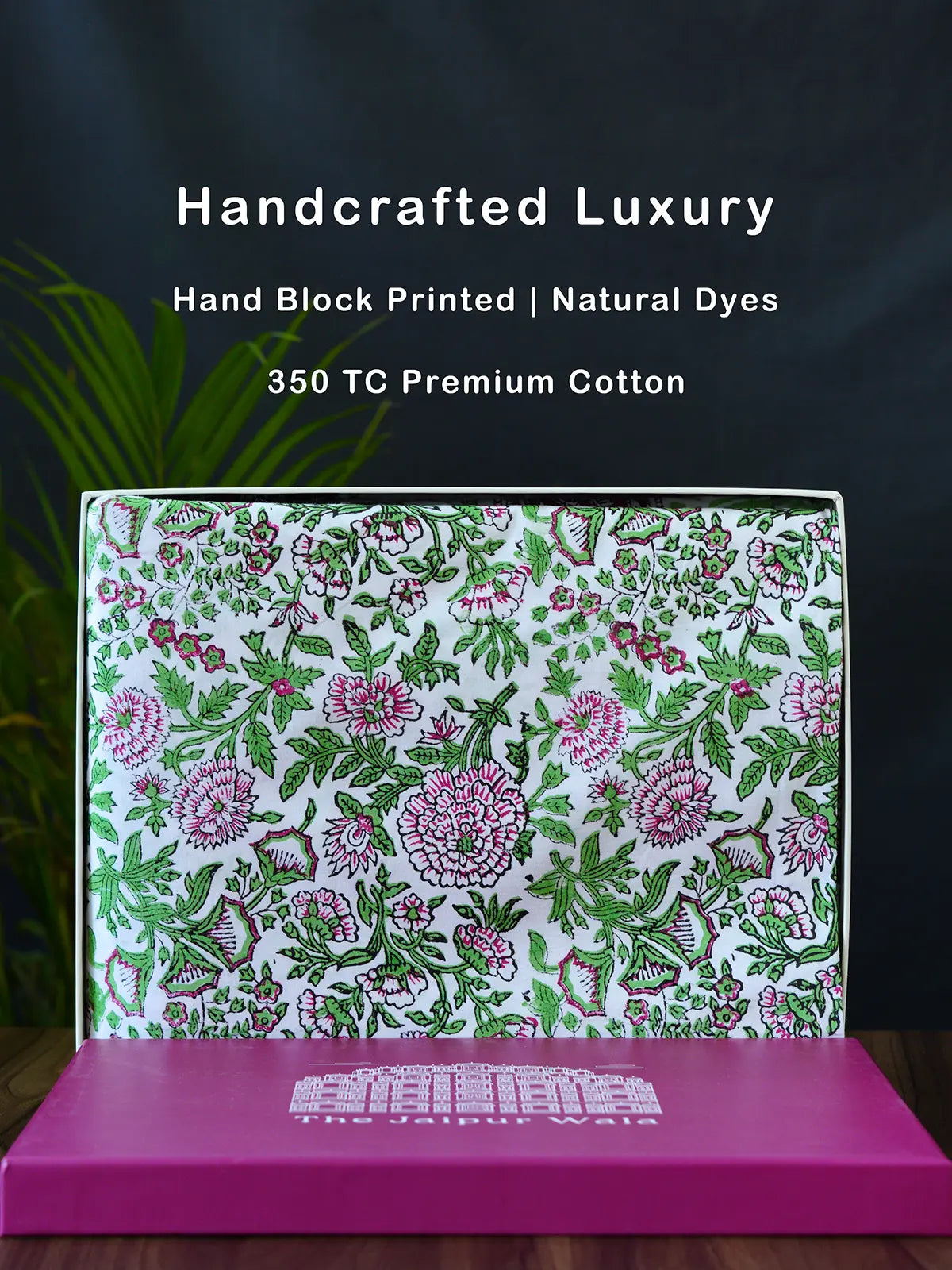
For block printed pieces: Avoid drying printed sides in direct, intense sunlight for extended periods. Dry inside-out if the print has bold, saturated natural dyes.
Washing Frequency: Less Is Often More
For sheet sets used by adults without pets, washing every one to two weeks is entirely hygienic and reduces wear significantly. For blankets and quilts used as top covers, monthly or seasonal washing is perfectly reasonable.
Storage Tips
- Don't store in plastic — plastic bags trap moisture and can cause mildew. Use cotton storage bags or a linen closet shelf.
- Don't over-compress — tightly compressing folded quilts stresses the fill and stitching. Fold loosely.
- Cedar over mothballs — cedar blocks repel moths without the chemical smell that lingers in fabric.
- Let everything air out before storing — ensure any remaining moisture has fully dissipated before folding away.
Dealing with Stains
Act quickly. For most stains: blot (don't rub), rinse with cold water from behind the stain, apply a small amount of dish soap, let sit 10-15 minutes, then wash as normal. Avoid bleach on natural dye printed areas — oxygen-based stain removers are generally safe.
What to Expect as Your Bedding Ages
Quality organic cotton doesn't degrade the way most textiles do. The fibres relax and open with each wash. Natural dye colours mellow over time — the deep indigo of a freshly printed piece softens into a beautiful faded blue after a year of use. That's not deterioration — that's patina.
With proper care, a good handstitched quilt from The Jaipur Wala will outlast most furniture in your bedroom. Some of the quilts made in Jaipur's artisan households are family heirlooms. We make ours with that same intention.
Quick Reference
| Wash Temp | Cycle | Drying | Frequency | |
|---|---|---|---|---|
| Percale sheet sets | Warm (40°C) | Gentle | Line dry or tumble low | Every 1-2 weeks |
| Muslin dohars/blankets | Cold (30°C) | Gentle | Line dry preferred | Monthly or as needed |
| Mulmul blankets | Cold (30°C) | Gentle | Line dry essential | Monthly or as needed |
| Handstitched quilts | Cold (30°C) | Gentle | Lay flat or hang | Monthly or seasonally |
| Cushion covers | Cold (30°C) | Gentle | Line dry | As needed |
| Towel sets | Warm (40°C) | Normal | Tumble low or line dry | After every 3-4 uses |
Take care of your bedding, and it will take care of you — for longer than you expect.